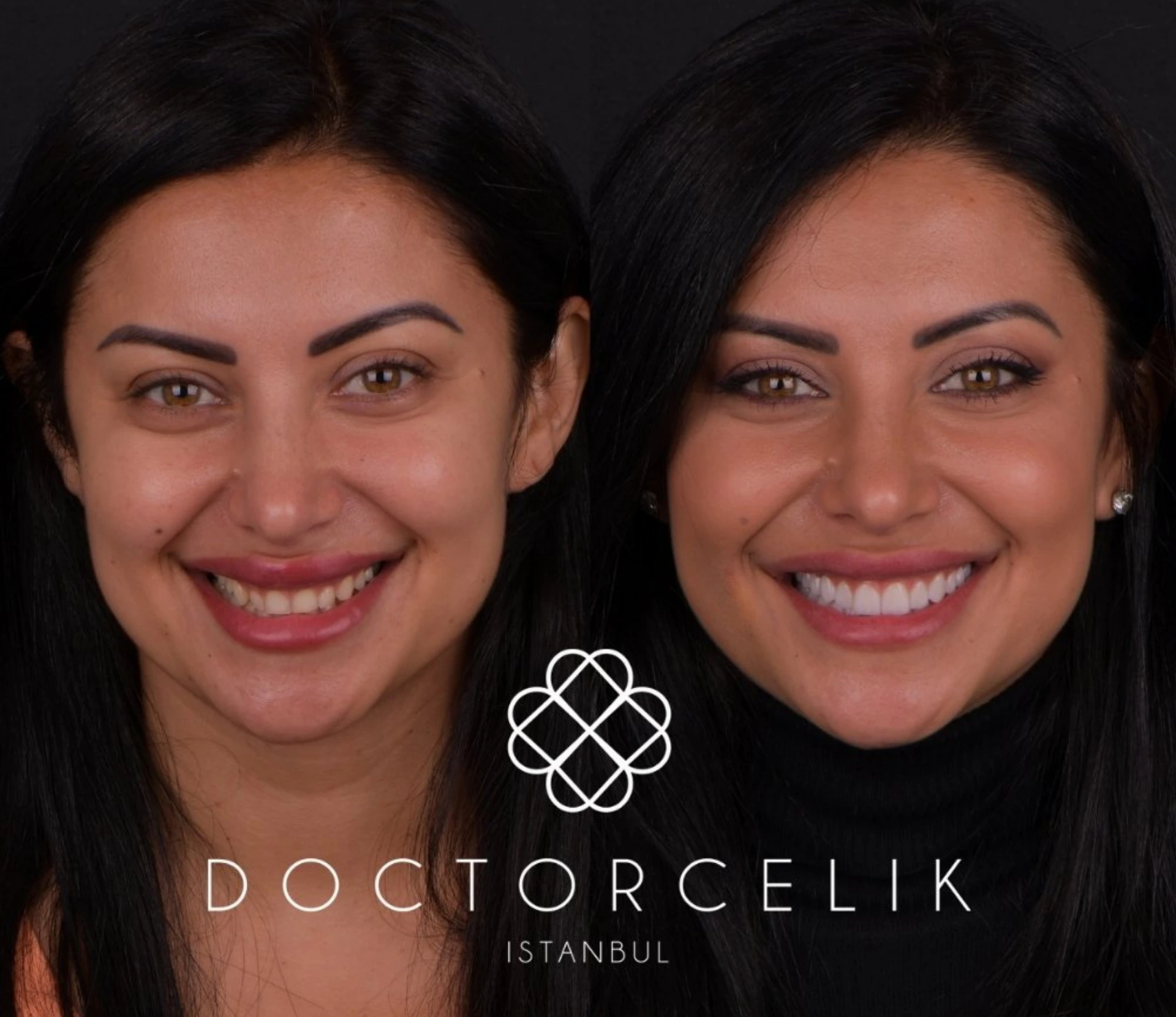
No-Prep Veneers & Minimal-Prep Veneers
What is the difference between No-Prep veneers and traditional (prep) veneers?
The fundamental difference lies in the level of tooth preparation required before placing the veneers.
No-prep veneers are ultra-thin porcelain shells bonded directly onto the natural tooth surface with little or no removal of enamel. This approach focuses on maximum preservation of the natural tooth structure.
Minimal-prep veneers, on the other hand, require a very small amount of enamel reduction (usually around 0.3–0.5 mm) to create ideal space for the ceramic restoration and to ensure a perfectly natural contour and bite alignment.
Both approaches aim to enhance the smile while maintaining aesthetics, function, and long-term durability.
Which option is better: No-Prep or Prep veneers?
Neither option is universally “better.” The correct approach depends entirely on the anatomy of the patient’s teeth and smile design goals.
No-prep veneers are ideal when the teeth need additional volume or minor cosmetic improvements.
Minimal-prep veneers are often recommended when teeth require alignment correction, shape modification, or masking of strong discoloration.
For this reason, the final decision is always made after a comprehensive clinical evaluation and digital smile analysis.
Will my teeth be shaved during veneer treatment?
This depends on the type of veneers selected.
With no-prep veneers, enamel reduction is typically minimal or not required at all.
With minimal-prep veneers, a very small amount of enamel may be reshaped in order to create the proper space for the veneer and achieve the most natural aesthetic result.
This preparation is extremely conservative and focuses on preserving the majority of the natural enamel.
Who is a good candidate for No-Prep veneers?
No-prep veneers are most suitable for patients who have:
- Small or slightly spaced teeth
• Minor shape irregularities
• Mild discoloration
• Slight gaps between teeth
• Teeth that require additional length or volume
In these cases, veneers can be added to the existing tooth surface without removing enamel.
Who may not be suitable for No-Prep veneers?
No-prep veneers may not be recommended in cases where patients have:
- Significant tooth crowding
• Teeth that are already prominent or bulky
• Severe discoloration
• Major bite or alignment issues
In these situations, minimal tooth preparation or orthodontic treatment may be necessary to achieve a balanced and natural smile.
Do veneers look natural?
Yes. Modern ceramic materials such as lithium disilicate (IPS e.max) are specifically designed to mimic the translucency and light reflection of natural enamel.
When properly designed according to facial proportions and smile dynamics, veneers can produce a result that is indistinguishable from natural teeth in both daylight and photography.
How long do veneers last?
With proper oral hygiene and regular dental check-ups, porcelain veneers typically last 15–20 years or longer.
Their longevity depends on several factors, including:
• Material quality
• Precision of the bonding procedure
• Oral hygiene habits
• Lifestyle factors such as teeth grinding
Is the procedure painful?
The treatment is generally very comfortable for patients.
No-prep veneers often require no anesthesia, as there is little to no alteration of the tooth structure.
Minimal-prep veneers are usually performed under local anesthesia, ensuring a completely painless experience during the procedure.
Will veneers damage my natural teeth?
When veneers are planned conservatively and placed correctly, they are designed to protect and reinforce the underlying tooth structure rather than damage it.
Modern adhesive techniques create a strong bond between the veneer and the enamel, enhancing both strength and durability.
What happens if a veneer breaks or needs replacement?
Although porcelain veneers are highly durable, they are not indestructible. In rare cases of damage, a veneer can usually be repaired or replaced individually without affecting the surrounding teeth.
Regular dental check-ups allow the dentist to monitor the veneers and ensure they remain in optimal condition for many years.