


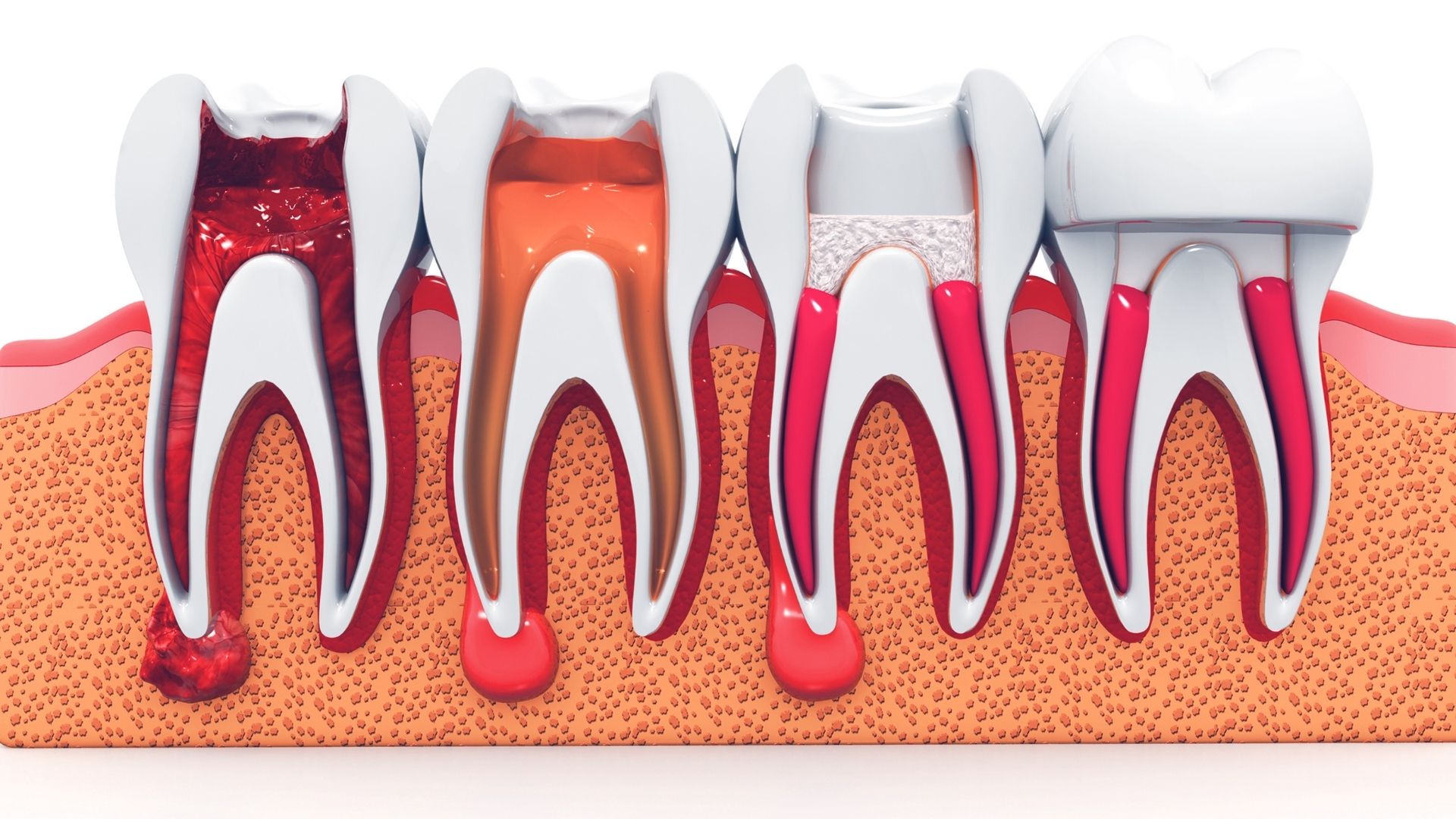
Endodontics (Root Canal Treatment)
Endodontics is the branch of dentistry that focuses on diagnosing and treating diseases affecting the dental pulp — the innermost layer of the tooth containing nerves and blood vessels. When tooth decay progresses from the enamel to the dentin and eventually reaches the pulp tissue, the damage becomes irreversible. At this stage, root canal treatment is necessary to preserve the natural tooth and prevent extraction. Early diagnosis of dental caries is therefore critical for maintaining long-term tooth health.
How Is Root Canal Treatment Performed?
Root canal treatment is performed differently depending on whether the tooth is vital (alive) or devital (non-vital).
In vital teeth, the procedure is usually completed in a single session. After administering local anesthesia, the decayed tissue is removed, and the infected pulp tissue — including nerves and blood vessels — is carefully cleaned from the root canals. The canals are then thoroughly disinfected using sodium hypochlorite irrigation. Once infection control is achieved, the canals are sealed with a biocompatible filling material to prevent reinfection.
In devital (dead) teeth, infection may extend beyond the root tip and can present with symptoms such as abscess formation, swelling, or fistula. In these cases, the root canals are cleaned and disinfected similarly; however, the canals are temporarily filled with antibacterial medications such as calcium hydroxide. This medicament helps eliminate bacterial growth in lesions extending beyond the root apex. The patient is scheduled for periodic follow-ups to replace the intracanal medication until the infection is fully controlled. Once healing is confirmed, the root canals are permanently sealed.
Root canal treatment is a highly effective procedure that eliminates pain, removes infection, and allows the natural tooth to function normally for many years.