


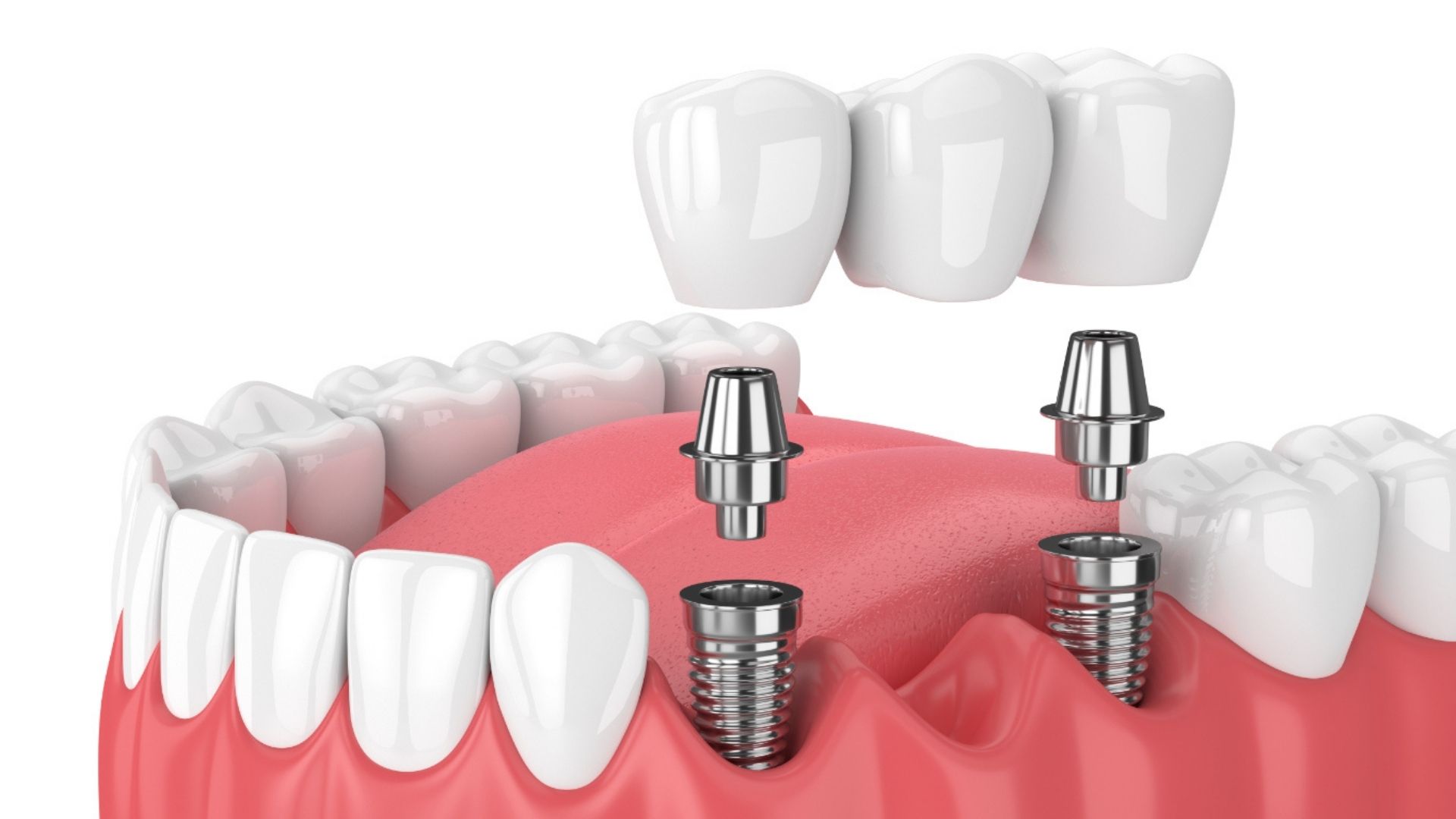
Implant Dental
Implant teeth are artificial roots made of biocompatible titanium to replace missing teeth both functionally and aesthetically. Dental implant procedures are comprehensive surgical treatments that require advanced knowledge, clinical experience, and technical skill. When performed by qualified professionals, implants offer a long-lasting, stable, and natural-looking solution for tooth loss.
Before starting implant treatment, each patient must be evaluated individually. The success of dental implants depends on careful planning and detailed clinical assessment. Your dentist examines bone level, bone thickness, surrounding anatomical structures, and biological limitations using advanced imaging techniques such as panoramic X-rays and 3D dental tomography. This personalized evaluation ensures a safe procedure and predictable long-term results.
Dental Implant
A dental implant is an artificial tooth root placed into the jawbone to restore missing teeth in both function and appearance. After tooth loss, implants help preserve jawbone structure and prevent bone resorption while restoring chewing ability and smile aesthetics.
Once the implant is surgically placed, a healing period is required for the implant to fuse with the bone. This biological process, known as osseointegration, creates a strong and stable foundation for the final dental crown or prosthesis. After successful integration, a custom-designed restoration is attached to the implant, providing a natural look and comfortable function.
Dental implant treatment is one of the most effective and durable solutions in modern dentistry for replacing missing teeth and maintaining long-term oral health.
As a result of the developing state-of-the-art technology and various researches, it has now become possible to treat missing or needing teeth during the day and that our patients do not lose their teeth even for a short time. Implant application in 24 hours (immediate) is suitable for patients whose bone criteria is sufficient, who have lost all their teeth or whose teeth need to be extracted, and for all patients who do not have any pathology or infection in the jawbones or teeth. After the procedure, non-permanent teeth are placed on the implants. Permanent teeth are attached to the patient following the completion of the required time for the compatibility of the implant tooth with the bone.
Patients should be carefully evaluated for their systemic condition, bone levels, bone thickness, and biological and anatomical limitations. There is a possibility that implant treatment may be inconvenient for patients who have an uncontrolled systemic disease and receive radiotherapy and chemotherapy. For this reason, patients should share their entire medical history with their doctors in detail, and treatment planning should be shaped accordingly.
Before the implant operation, which is a surgical application, only the application area is deeply anesthetized with local anesthesia. Thus, patients do not feel any pain whatsoever. After the procedure, with the medications given and various precautions given by your doctor, the post-operative period can be overcome without pain and swelling.
After the application, you can use your non-permanent dental prosthesis fixed on the implant teeth immediately, eat, talk and continue your daily activities. However, during the 3-month period, which is the process of fusion of implant teeth and bone, you should apply the diet recommended by your doctor. You can return to your usual diet after permanent prostheses are placed.
The life of implant teeth is the same as natural teeth. It can be for life if the patient takes care of their dental hygiene.
Implant treatment fees vary according to the implant tooth brand used. Implant teeth, which are placed as an alternative to natural teeth in the mouth for a lifetime, are among the treatments that should not be delayed in terms of preventing irreversible bone loss and ensuring the continuity of aesthetics and function.